


Good morning, Wimblers.
The Championships are well underway, which can only mean one thing: Wimbledon is swamped. It’s hot. It’s busy. It’s even a little bit overwhelming. But, crucially, it’s also Wimbledon’s buzziest time of year.
This week, we’re answering the perennial question: What makes the Wimbledon strawberry so special? We spoke with Marion Regan — owner of Hugh Lowe Farms, which has been supplying Wimbledon with strawberries for three decades — about their fruit’s journey to greatness.
Plus, is this the end of e-bikes in Merton? And where you can find free rosé in Wimbledon village (you’re welcome) in our news and events listings.
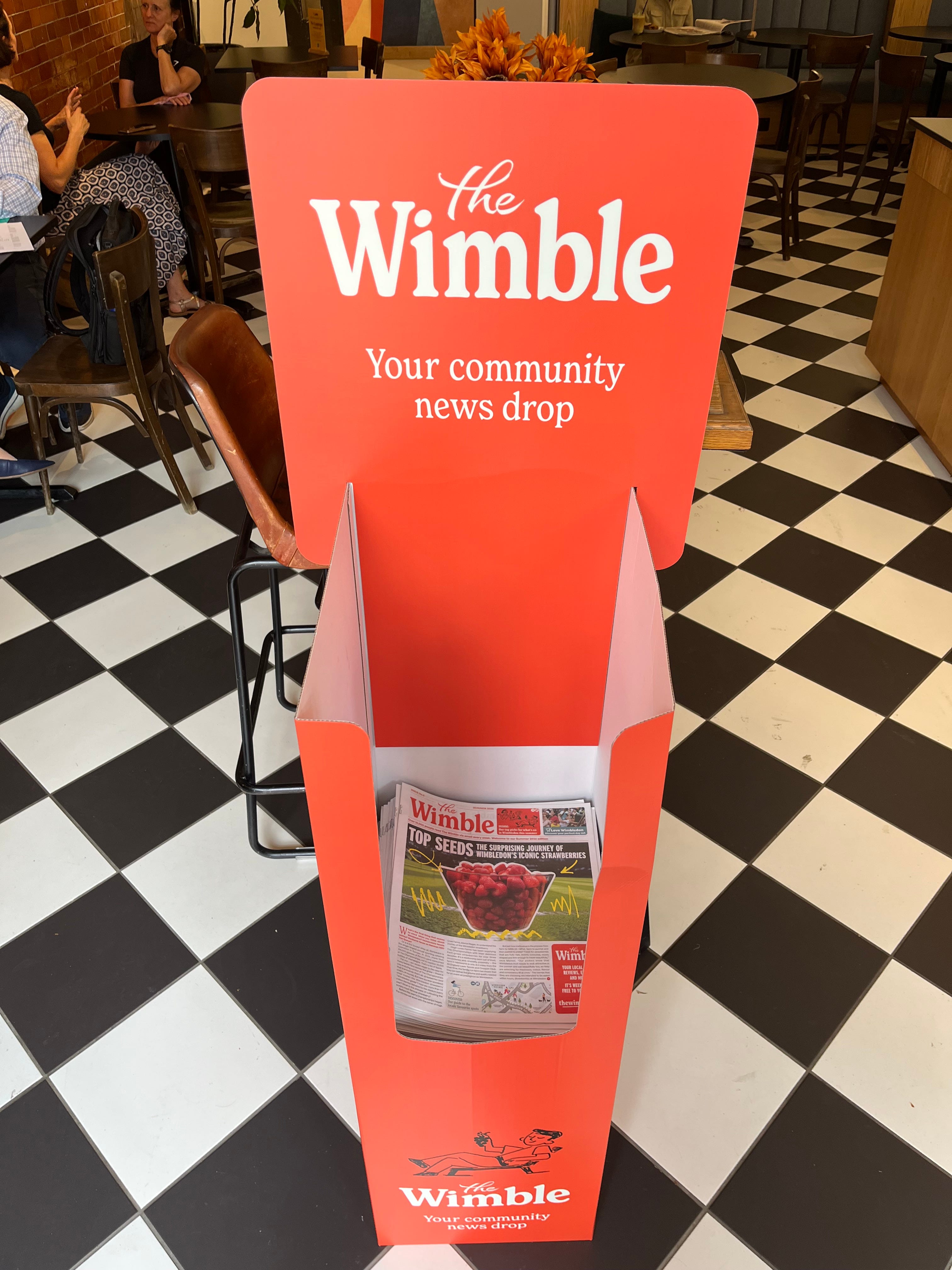
The print edition has been flying off the shelf (or stand, rather). If you haven’t picked up a copy, just head to Wimbledon Quarter — outside the M&S or inside The Fire Station Café — to grab your own. The stands look like the image below.
News snippets 🗞️
🚳 Merton council has requested an urgent meeting with e-bike operators Forest and Lime as The Championships get underway. The council is threatening to seize Lime and Forest bikes after large numbers were left strewn across Wimbledon’s pavements this week. The Championships is Wimbledon’s busiest time of year, so it should come as no surprise that the designated parking bays reached their capacity within the first few days of the tournament. The council is now seeking an urgent meeting with the e-bike operators to get the situation under control. Read more about that story here. But tennis aside, The Wimble has received plenty of email over the past two years about the e-bike problem in the borough. Should we ban e-bikes? Or is the issue not the bikes, but the lack of parking bays and should we petition for more? Let us know your thoughts below.
🥳 Navy veteran, Cllr Nedra Daniel, has been appointed Merton’s Armed Forces Champion, taking over the role from former Cllr Dennis Pearce. According to the council’s press release, “The Armed Forces Champion has the responsibility to be a voice, advocate and first point of contact in the council for our armed forces community. This includes veterans, serving personnel, reservists and military families. The role also involves promoting the Armed Forces Covenant – to which the council is a signatory – as well as raising awareness of obligations under the Armed Forces Act 2021, the NHS constitution and other relevant legislation.” Born in St. Vincent and the Grenadines, she moved to the UK aged 25 in order to join the Royal Navy. Across her decade of service, she was posted to three seagoing vessels – HMS Ark Royal, HMS Illustrious and HMS Defender. The appointment came just before the borough’s annual Armed Forces Day parade last Saturday.
🏥 St George’s Hospital has issued a warning for this year’s Championships. With over 500,000 people flocking to the borough over the fortnight, St George’s has warned that it may lead to increased demands for their emergency services, not least as we experience record-breaking temperatures. Last week’s heatwave proved just how important it is to keep safe in the sun. Click here to read more.
🌲 Have your say on where Merton’s new pocket parks should be. Pocket parks are small parks that are accessible to all residents. They are usually very small – no larger than the size of a parking space – but some can be as big as a tennis court. Pocket parks have been shown to tackle fly-tipping by bringing more people into the area and making the space look managed and cared for. If you think you know a local spot that would be perfect for a pocket park, get in touch with the council via their engagement hub. The survey is open until 6 August.
The Wimble’s sponsor of the week 🛍

Specialists in luxurious home and body products, Rituals is offering a summer event where attendees can get a free hand massage, 20% off selected items and more. Head to Wimbledon Quarter to check them out and click here for more details.
Property of the week 🏡

I’m a big fan of the light in this house, particularly in that garden patio area. While it’s been modernised in parts, this five-bedroom house still has a homespun feel to it. Location-wise, you couldn’t get much closer to Wimbledon Park if you tried, and from there it’s only a short walk to the shops and cafes. The price tag for a home like this? £1.5 million. Check out more photos here.
The Wimble’s to-do list 🏀
🍫 Hotel Chocolat summer tasting: The world-famous chocolate shop is hosting an immersive tasting experience that sees summer reimagined through a chocolatier’s lens. Those attending will get the chance to taste their way around a ‘chocuterie’ board and learn how to make their own version to impress barbecue guests. Tickets are £20 per person.
Where: Hotel Chocolat, Wimbledon Quarter
When: Thursday 2 July, 7.30–8.30pm
🥂 Nyetimber takes over Jeroboams: Enjoy a free — that’s right, free! — tasting of Nyetimber throughout The Championships at Wimbledon Village’s Jeroboams. Try the Classic Cuvée, the rosé and the Cuvée Chérie demi-sec, all open on rotation throughout. All you have to do is walk in.
Where: Jeroboams, Wimbledon Village
When: Sunday 28 June — Sunday 12 July
🍓 Strawberries and cream giveaway: This is a free strawberries & cream giveaway in Wimbledon Quarter’s courtyard. You can also up a complimentary Rituals SPF sample and summer reward card whilst you’re there. Click here for more details and to see everything going on at the Quarter throughout The Championships.
Where: Wimbledon Quarter Courtyard
When: Saturday 4 July, 11am
🏎 Southside Hustle Classic Car Meet: This informal meeting of classic car owners in Wimbledon (and the surrounding areas) features a stunning array of cars — some of which are extremely rare. If you’re a petrolhead, or you just like the idea of a bunch of classic cars in one place, then head to Wimbledon Village next Sunday.
Where: Wimbledon Common Southside near the farmers’ market.
When: Sunday 5 July, 8–11am
🌳 Forest bathing at Cannizaro Park: While this event’s title might lead you to conclude you’d be having a bath in the forest, actually it’s about “bathing” yourself in nature. Join Susanne Meis, founder of Meet in Nature, for a day of woodland immersion. It’s £15 per person and can be booked here.
Where: Cannizaro Park
When: Saturday 11 July, 10.30am–12.30pm
🏆 Her Court: The Role that Wimbledon Played in the Suffragette Movement: Readers will remember our feature with Cynthia Valianti Corbett a few weeks ago discussing this exhibition. Well, now it’s here! Today officially marks the opening of this wonderful exhibition! Pop along — you won’t regret it.
Where: Wimbledon Museum
When: Thursday 2 – Saturday 11 July, 11am-5pm
⚽️ Fifa World Cup at Caddi Club: As I write this, England are getting ready to play DR Congo this afternoon. As I suspect is the case for many of our readers, I’m nervous. Caddi Club is showing all the England matches (granted we make it through this round) with £5 pints before kick-off. You also get a free pint if you sign up to the Caddi newsletter 60 minutes before the game starts (although this might just be for the game against DR Congo — we’ll have to wait and see).
Where: Caddi Club
When: Tuesday 11 June — Sunday 19 July (hopefully)
The surprising journey of the Wimbledon strawberry 🍓
What’s the first thing that comes to mind when you think about Wimbledon: immaculate tennis whites, sunburnt faces on Henman Hill or the Queue?
Or is it the booze? After all, Wimbledon is the single largest annual sporting catering operation in Europe. In 2024, more than 314,000 glasses of Pimm’s were consumed at the Championships, not to mention 25,000 bottles of champagne. That’s a lot of tipple.
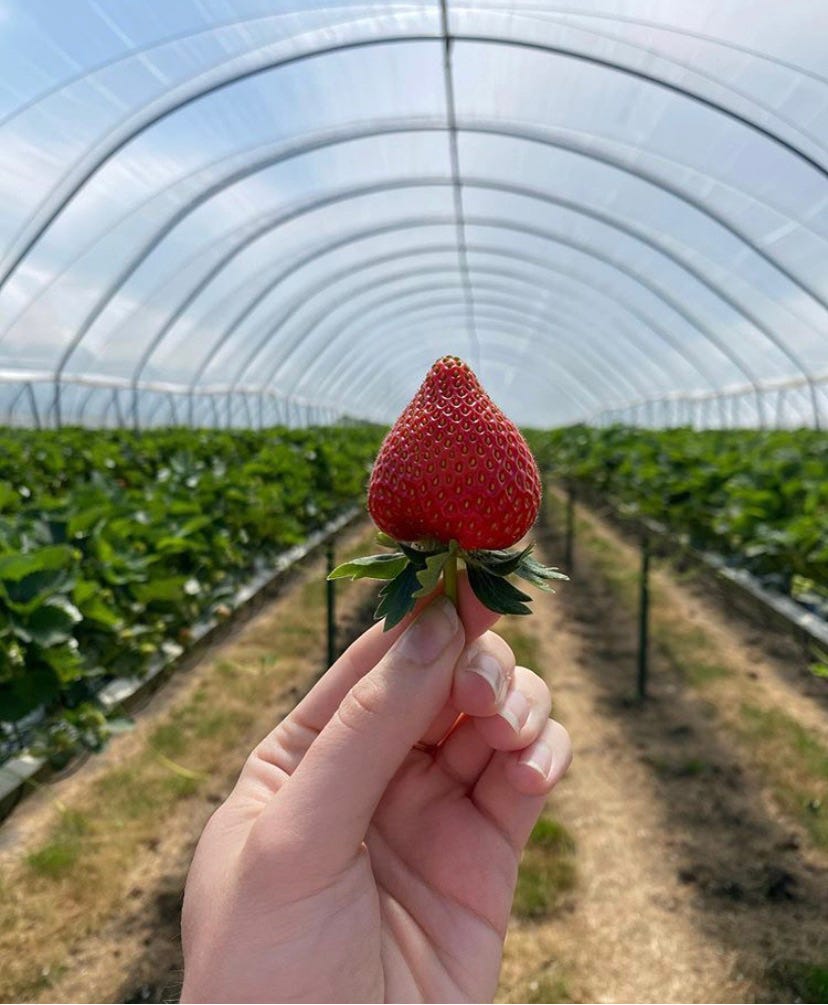
For me — as I would wager is the case for many tennis fans across the globe — there is one enduring symbol of the Championships that transcends them all: strawberries (and cream, of course). But how are more than 1.5 million berries delivered to the stadium every year? What is the process of cultivating the world’s most famous strawberry?

Before this year’s Championships began, The Wimble sat down with the owner of Hugh Lowe Farms, Marion Regan, to understand the journey of the Wimbledon strawberry.
Hugh Lowe Farms has been supplying the Championships with their delicious Kent-grown strawberries for over three decades. It’s a relationship born out of trust, consistency and, crucially, proximity — the farm in Mereworth, Kent is only 31.5 miles from the All England Lawn Tennis and Croquet Club. Over time, the family-run farm has shown that they can deliver the volume and quality needed for an event as prestigious as Wimbledon.
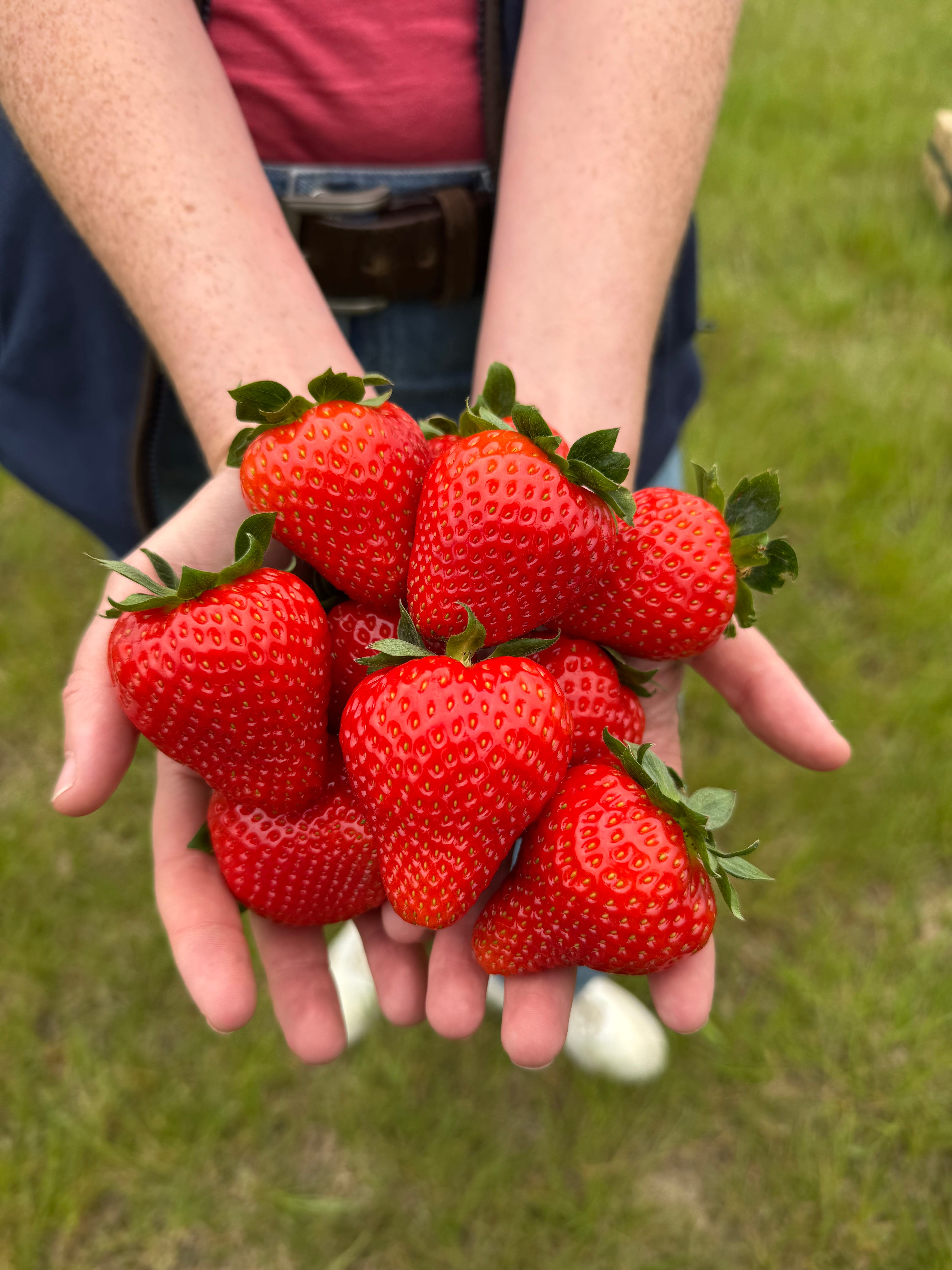
But just how meticulous is the process from farm to table? “I look for strawberries that are fully ripe, evenly coloured, nicely shaped and firm enough to travel beautifully,” says Marion. “Our pickers know that Wimbledon fruit needs to look attractive in the punnet and eat beautifully too, so they are selecting for freshness, colour, flavour and consistency all at once.” The berries that they are choosing are intended to be eaten within hours. Strawberries at Wimbledon are only served on the day that they are picked. Any berries leftover are frozen and then made into Wimbledon’s strawberry jam, which is enjoyed throughout the year and features in their afternoon tea and Victoria sponge cake.
Before speaking with Marion, I was under the impression that there was only one variety of strawberry picked for the Championships. This is not the case. The strawberries are picked with flavour in mind first, but also with appearance, reliability and how well the fruit can handle the picking and packing process. The exact mix changes from season to season because varieties perform differently depending on the weather. A big part of the farm’s job is matching the right variety to the right moment in the season.
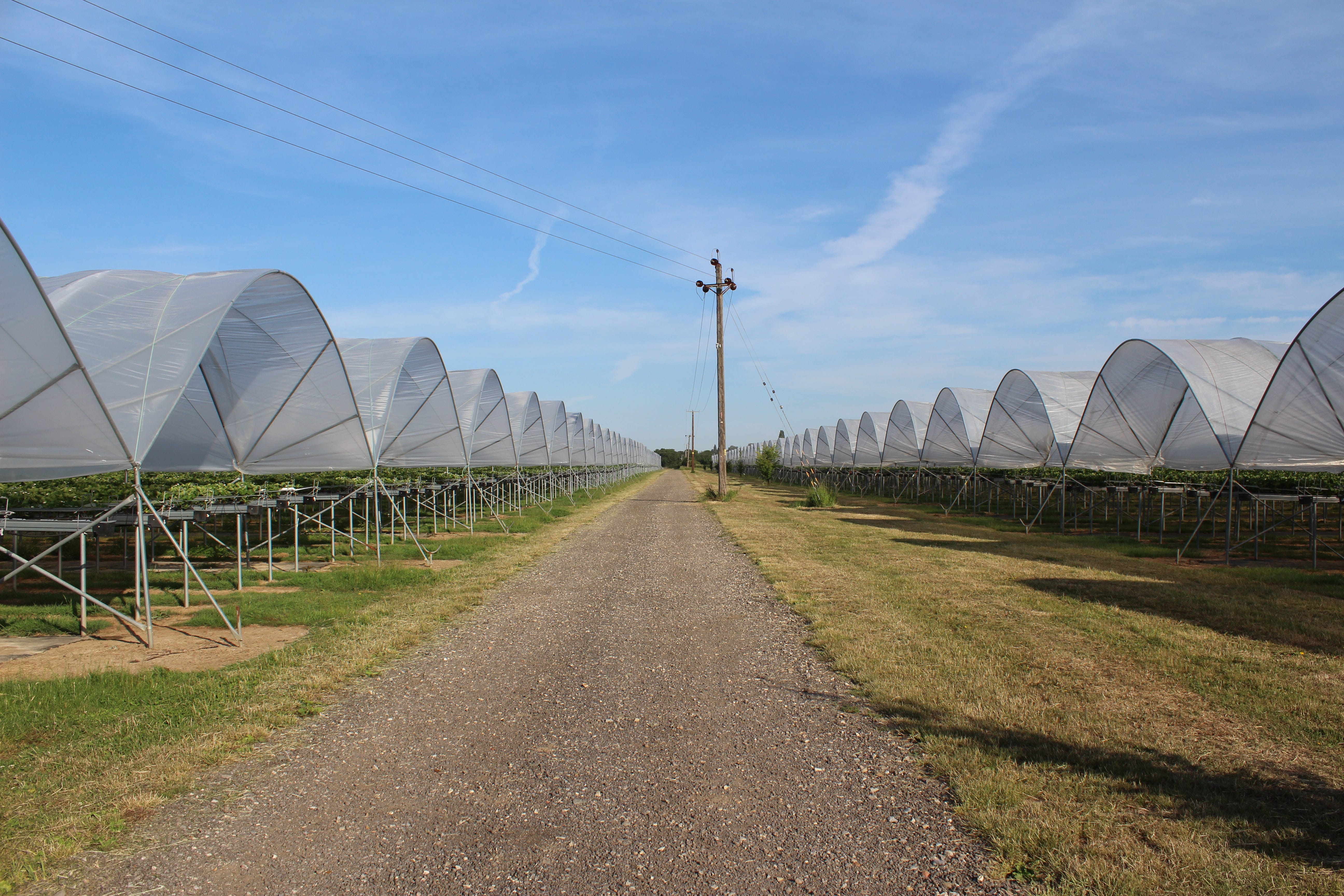
Delivering huge quantities of strawberries to the stadium each day for two weeks is no small operation. “The process starts very early,” Marion explains. “Our pickers begin at first light, when both the fruit and the people harvesting it benefit from the cooler temperatures. During the Wimbledon period, a substantial team is involved across picking, quality control, packing and transport. Because we know the order pattern, berries can be picked especially for the Championships, then taken quickly to the cooler where they are chilled, weighed, checked and then packed and despatched to SW19. It’s a highly organised operation rather than a last-minute rush.”
Each night throughout the Championships is all about being ready for the morning: checking orders, reviewing which fields are best for the following day, and making sure labour, transport, cooling and packing are all lined up. “Those mornings are busy, of course, but they are also deeply satisfying, because they bring together months of work into a single, well-executed chain from plant to punnet to plate,” says Marion.
It’s worth highlighting that Wimbledon’s strawberry production is about much more than the Championships fortnight. It’s a year-round discipline of planning, planting, nurturing and watching. The crop at Hugh Lowe Farms is established from young plants rather than seed. As the season progresses, the farm constantly monitors the weather, fruit development, flavour and plant health. Of course focus sharpens nearer the Championships, but it really is a process that requires time, precision and patience.
British weather is about as capricious as it can get. Too much light, too much rain, heat spikes or unseasonal cold spells can all have a detrimental effect on the crop.
I ask Marion how the cultivation technology has changed over the past 30 years. People’s perceptions of food have shifted in recent times, with a greater focus on sustainability. In 2019, plant-based cream was made available at the Championships to ensure that everyone could enjoy the tennis-based tradition.
“Certain changes have been enormous, but strawberry growing is in some ways unchanged — for example, the focus on freshness and careful selection process by hand,” she explains. That said, the farm is very focused on sustainability. “It runs through the way we farm,” says Marion. “We grow our berries in recycled coir, derived from waste coconut husks rather than peat-based growing media. We use biological controls wherever possible, encouraging beneficial insects and native pollinators so that chemical intervention is only used when strictly necessary. And our water is carefully managed, with reservoirs storing winter water for irrigation later in the year.”
What is the atmosphere like on the farm during the fortnight? Is there a sense of pride and fulfilment from the team that has made it possible?
“Yes, there is definitely a sense of pride,” she explains. “Wimbledon is recognised all over the world, so everyone on the farm understands that they are contributing to something iconic. But there is also a very practical atmosphere: people are focused, busy and keen to do the job properly. The satisfaction really comes from knowing that the fruit has been grown well, picked carefully and sent out in first-class condition.”
Question of the week 🔍
Last week, I asked you in what year Wimbledon Common’s windmill was built. The answer: 1817.
Q: How many people come to Wimbledon during The Championships because of the tennis?
You’re up to date 👋
Thank you for reading this week’s edition of The Wimble. It was a pleasure to interview Marion — I hope you enjoyed reading the piece as much I enjoyed writing it. Have a great rest of the week and we’ll see you next Thursday.
We have an e-bike parking bay in our street, but people still leave the bikes in inappropriate places. I’m sick of them littering the streets. People also leave them on the footpath in my local park. They’re a menace.
More bays and better management / more frequent rounds from Lime/Forest staff seems like the constructive way to go. We shouldn’t be banning a healthy mode of transport. A (large) bike park area with. Wimbledon Park during the tournament?